
“Without music life would be“a mistake” Friedrich Nietzsche
“Music expresses that which cannot be said and on which it is impossible to be silent” Victor Hugo
“Sam Philips always encouraged me to do it my way, to use whatever other influences I wanted but never to copy, that was a great gift he gave me: believe in myself, right from the start of my recording career. If there had been no Sam Philips I might still be working in the cotton fields” Johnny Cash
Introduction
What is it about music?
What is it about music?
Have you ever been at home ironing or driving down a clogged up M6 listening to the radio, or actually, not really listening to the radio, when a certain record comes on. You may have heard it before, it may be your favourite record ever, it may just feel like you heard it before or maybe you’ve never heard anything like it, but it grabs you. It takes over your attention, it infects your whole self like a virus and launches your conscious and unconscious self into another place.
What is that thing that music does?
How is it made, created, cooked and served and what is the secret ingredient? Well before we go any further, I have an admission to make…… I’m not sure, but I’m keen to look for some clues.
First of all, as we consider “The Thing About Music” we need to remember that there are two very different perspectives from which music is seen and heard. The perspective of the audience and the perspective of the artist. Both listen to the same sound but hear very different things. The musician needs to listen as a musician if he is to succeed in executing the technicalities of playing. At the same though, if he is to succeed in to adding the magic ingredient, he must hear the music as the audience hears and experiences it.
Let me give you an example: “Dancing in the Moonlight” by Toploader. As the audience I love this record, it lifts me from the first tinkling keyboard phrase. I also play this song; I play the bass. From the point of view of the musician it is deeply tedious. There is a simple 4 bar bass riff that repeats and repeats and repeats through the song. The only variation which occurs in this cycle of repetition is when the bass falls silent for 8 bars. When this song comes round on the set list you can’t help feeling “Oh no not again”. Then I must take a deep breath and move into the head of the audience. Then as I hit my cue my concentration is on playing the riff, but I hear it from the perspective of the audience. So it is from the audience that the magic ingredient is added.
When you make a record, (“record”, here meaning a reproduction of a recorded sound in any format. The format’s not the issue, get over it.), the relationship between audience and performer remains the key, just as much as in a live performance. As the tracks are recorded, the arrangement developed and the performances executed, the focus needs to keep coming back to the way this music will affect the audience. There are no good or bad musical styles but there are good and bad records. The good records connect with the audience. They have an emotional impact. They draw the audience into their world, and they affect.
In the studio the magic ingredient, can be added at any stage and in many ways. It may be written into the song by the writer (Bob Dylan, Carol King), it may be inserted into the arrangement (Burt Bacharach, Brian Wilson). It could be in the performance (Rod Stewart, Liam Gallagher), it can be placed like a cherry on a cake in the mix (Brian Wilson again, Phil Spectre). In any or all of these cases, the studio is the kitchen of musical cooking.
One Two Three Four
So, you buy a guitar (keyboard, penny whistle, Jews harp; insert as appropriate) and you learn to play it. Three chords will be fine, four would be nice, 300 might actually get in the way. Remember we’re looking for the magic ingredient.
Next you learn to play your favourite songs. Your mate learns to play his favourite songs. You and your mate form a band with his brother on drums (his brother is 11 and can’t actually play the drums). You argue over who will play the bass and who will play the lead. Nobody wants to sing. Everybody wants to sing. The band plays a disastrous gig at the school hall then the whole thing falls apart in a flurry of embarrassment and acrimony.
You meet someone at a gig (Lennon and McCartney), or on a bus (George Harrison) or some bloke knocks on your door and asks if you want to form a band (Johnny Marr and Morrisey). You form another band. This time the drummer used to be in a band that once got a demo played on local radio and can actually play the drums. This time you have at least a vague idea how this is done. Things start to gel. Everyone at least starts and finishes at the same time. The noise you make starts to sound like your favourite records.
Now it starts to get interesting. You start to believe in yourselves. You write a song. It sounds like a poor imitation of your favourite song. You write more songs. Some of these songs start to sparkle. People start to say things like “Oh I like that one”. (Tip; if your mum/boyfriend/girlfriend/partner/special other says “Oh I like that one” take no notice. They will probably like everything you ever do and cannot be trusted as objective critics).
We are definitely getting somewhere now and it’s time to make a record.
Making a Record
PART 1
The Song
The first rule of writing a song is that there are no rules. There is no second rule.
There are however tricks, guidelines, musical theory, formulas and genres. We will come back to this later.
First this: there is a factor common to all (all?) successful songs. They all build on what went before. A writer’s work may develop or evolve from his predecessors, or it may react against it, but nothing comes from nowhere.
Artists take what went before, what excites them, and they change it. Sometimes the changes are a conscious (concept albums, Prog Rock) and sometimes unconscious (Psychodelia). Changes might be technically driven (80’s Synth Pop and anything with an electric guitar on it). For me the most interesting changes arise through cock-ups. The cock-up theory goes like this: they tried to do that, but it came out like this, but this sounds great!
There are endless examples of these processes:
Elvis Presley’s Rock’n’roll comes from a combination of Black American Blues and Country filtered through Presley’s persona.
The Rolling Stones played Blues, but it come out as Rock Pop.
Led Zepplin played Blues, those who steal from them call it Heavy Metal. Bands playing today take Heavy Metal and it became Thrash Metal, Deth Metal and various other metallic genres.
Even genres which seem dissociated from what went before, aren’t. Punk is 50’s/60’s Rock’n’roll played badly and fast to annoy the Prog Rockers. Psychodelia is any genre you like on drugs (Pet Sounds is barber shop quartets on drugs).
The moral of this story is start from what excites you then do it your way. Don’t be afraid to steal but make sure you put something of yourself into it. Without your creative input stealing is just theft.
So, each genre builds or changes what went before but let’s return now to what defines each genre as different from the other ……The Formula. Formulas, predictable patterns, are important because they allow, even invite the audience (remember them?) in. Use The Formula to draw the audience into the world of your song and when you have them there, all comfy in their knowledge that chorus follows verse like night follows day ……surprise them! Give them something new, something different. Stimulate them!
Be aware however that there are pitfalls here. Leap too far, too soon and you’ll lose the audience, and you will have affected no one. Stick too rigidly to the formula and your audience is bored into disinterest.
Do not misunderstand me, I am by no means talking about just the mainstream genres. Niche and underground genres are often the most rigidly formulaic. If you are a Thrash Metal band with a Thrash Metal audience and you don’t stick to the rules, they’ll walk. Folky Bob Dylan picks up an electric guitar and he is Pop, a Judas, and the audience literally leaves the auditorium (luckily for him he found an even bigger audience quite quickly).
So, start with the formula and then push the boundaries but take your audience with you. Get it right and you’ll succeed on all levels. The Beatles go from Please Please Me to Strawberry Fields Forever in five years and take the whole world with them. The Beach Boys go from Surfing Safari to God Only Knows and Brian Wilson is hailed as a genius (not just by me). So best do it that way then.
PART 2
The Arrangement
As with the song, the arrangement can be adapted from, derived from, borrowed or stolen from, what went before and, as with the song, this theft is only a creative act if you add something of yourself.
The arrangement is as important a part of the production of a record as any other aspect. The arrangement must fit the song. In style and approach the arrangement needs to be in tune with the song giving the performance an appropriate space in which to resonate.
The arrangement must tell the same story as the melody. It needs to build with the emotional impact of the lyric and to support and reflect the sentiment and the message of the song.
A particular pitfall of arrangement to be avoided is the inexorable drift towards the grandiose, the complex. And the use of synthesisers to imitate orchestras. Following the mood of the song on many occasions actually leads to simplicity in the approach. Listen to Tapestry by Carol King. The lyrics and especially the melodies are allowed to emerge powerfully from the simple backdrop of the arrangement.
On the other hand, listen to The Long And Winding Road as post-produced by Phil Spectre. Part of the lyrical idea of the song is clearly loneliness so what is the 90-piece orchestra for?
So as a song writer or a producer you need a clear view of the style and approach you want to take in the arrangement of your record if you want to maintain control of the finished product. The best arrangements support and amplify the message of the record, the worst will undermine it.
PART 3
The Performance
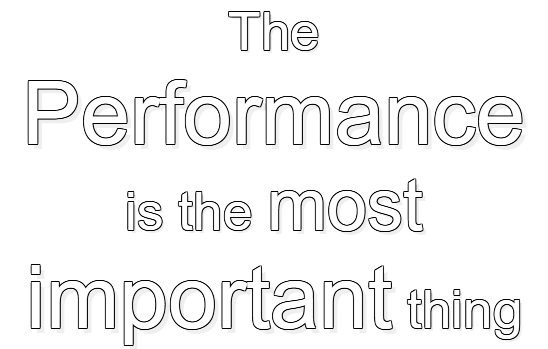
Thus far we have already covered many aspects of record making. These were not covered in order of importance. In fact, the performance is the most important thing. It’s worth repeating that
Having said that it’s clearly difficult to offer any advice on how to get it right, or even better. Of course, the recording process offers the particular advantage that you can have another go. This often works. The phrase “just do that again” comes to mind. Then again there is nothing better than being able to just do it. Do it again and again but not here, in the studio, it’s very expensive, rehearse. Rehearse, rehearse, rehearse.
Let’s also remember that the most complex, accomplished, virtuoso is not necessarily the best performance, you’re looking for whatever record needs which maybe simple but perfectly formed. This part is completely in the hands of you, the creator.
PART 4
The Studio
The Difference between the Live! and the Recorded Experiences
The Live Sound!
I saw The Jam live at Leeds University. They were going into “Down In The Tube Station At Midnight”. They tried to start it with a tape of a tube train, but the tape just spluttered then stopped. There was a moment of silence before Paul Weller uttered an unheard expletive and then launched into the most searing rendition of the song you’ve ever heard.
I saw Brian Wilson at the Manchester Apollo. Brian wasn’t quite all there. Important parts of him were still in bed in California. There wasn’t another Beach Boy in sight. His voice was weak, and he avoided the high notes that on record could make your soul weep. This concert was possibly the best I have ever seen. Grown men cried and hugged each other. We didn’t so much applaud as worship.
I saw a band of no fixed ability in a pub last Friday. They started hesitantly. They finished on a roll. People danced, jumped around, yelped and screamed. “More! More!” they shouted at the “end” (the bit before the encore). I smiled. It was a great night.
These are gigs, live performances. At a gig it’s not just the artist that performs it’s everyone present, including, if not especially, the audience (them again). A gig is an event, a collective, shared experience. If it’s not, it’s a crap gig.
A record tries to capture the experience of actually being there as the musician played. Once captured it can be endlessly repeated just by pressing play. Naively, the obvious way to capture the experience would be to take your recording machine to the gig and press record. Or, if you’re clever you can take your multi-track recording machine to the gig and tap off the big mixing desk at the back of the room. The result of this approach is the live album. Have you ever heard a good live album? One that you can play more than occasionally, or even more than once, or even all the way through (yes, there are one or two, but you know what I mean). One that gets anywhere close to reproducing the feelings buzzing through the people in the audience at the gig. So can we agree that as a general rule of thumb the live album approach doesn’t work.
“Why?” you say. Why? Because all that the recording machine captures is the sound in the room at the time (which, compared to the sounds normally emitting from your average sound system at home is probably pretty poor). You hear the sound of the gig when what you wanted to reproduce was the experience.
We want to capture and reproduce the live experience, the emotional impact you would get if you were actually there with the performer at the performance when in fact you are sitting alone in your lounge/bedroom/car/kitchen and the performer is in a sterile studio at another time on a different continent.
The environment of the listener means their sensory experience is completely different for the recorded versus the live listener. The lone record listener can as they say, hear a pin drop. Even the distracted record listener, without the benefit of musical training of any kind, could pick out the slightest technical error on first hearing.
Even without a most basic grounding in the technical practices of the recording engineer, the listener will know almost instinctively know that there is something not quite right about the demo his mate made in his mum’s conservatory.
So, it seems we have issues here in translating the live experience to a recording.
Creating the live experience on record.
Deconstruction, Reconstruction & Control.
Let’s compare records to pictures. The two mimic each other in many ways. The finished products are representations of what was actually there. The view of a mountain in a landscape painting is not a real mountain, the mountain is not actually there, it’s a representation of the mountain. There is no 3D in a painting, it’s a trick of composition. There is no one playing to left and right on a stereo record, it’s a trick of technology.
We can also draw parallels with the processes of making records and pictures. The painter moves colour, shape and line around a canvas to produce a picture. In much the same way we can manipulate sound and the qualities of sound around the stereo field to produce a desired effect. What we need to be able to do this is control of the sounds we are working with.
This leads us to require the various sounds making up the whole to be separated, deconstructed, then reassembled to represent the experience that we talked about earlier. In practice this usually means physically separating sound sources, often in time (i.e., recorded separately). That leads us to use multi-tracking. It leads us to techniques such as the complete removal of reverberation on recording, then adding it back later to achieve total control of just that one aspect of the overall sound. And it leads us to use many other techniques such as Eq, compression and other effects all intended to achieve control.
The Technical Stuff
If you are planning a home recorded, self-engineered, self-produced project, you need to know “The Technical Stuff” to have any chance of producing a sound comparable with a professionally produced product. That is everything on the TV, radio, vinyl, CD, download, streaming and all formats yet to be conceived of.
There are many sources of information on “The Technical Stuff” so I don’t propose to cover this in any detail here. Or even at all in this article but I will cover “what the technical stuff can do for you” in a second follow up piece.
While digital technology has made the necessary hardware significantly cheaper and so a viable option financially, it has not simplified the technical aspects of the process.
So do your homework.
‘A personal view’ written by Stuart Comins
 Phoenix Studios
Leave a comment